




Brake Service & Repair
Brake Service & Repair in Burlington, WI: When to Replace Brake Pads and Rotors
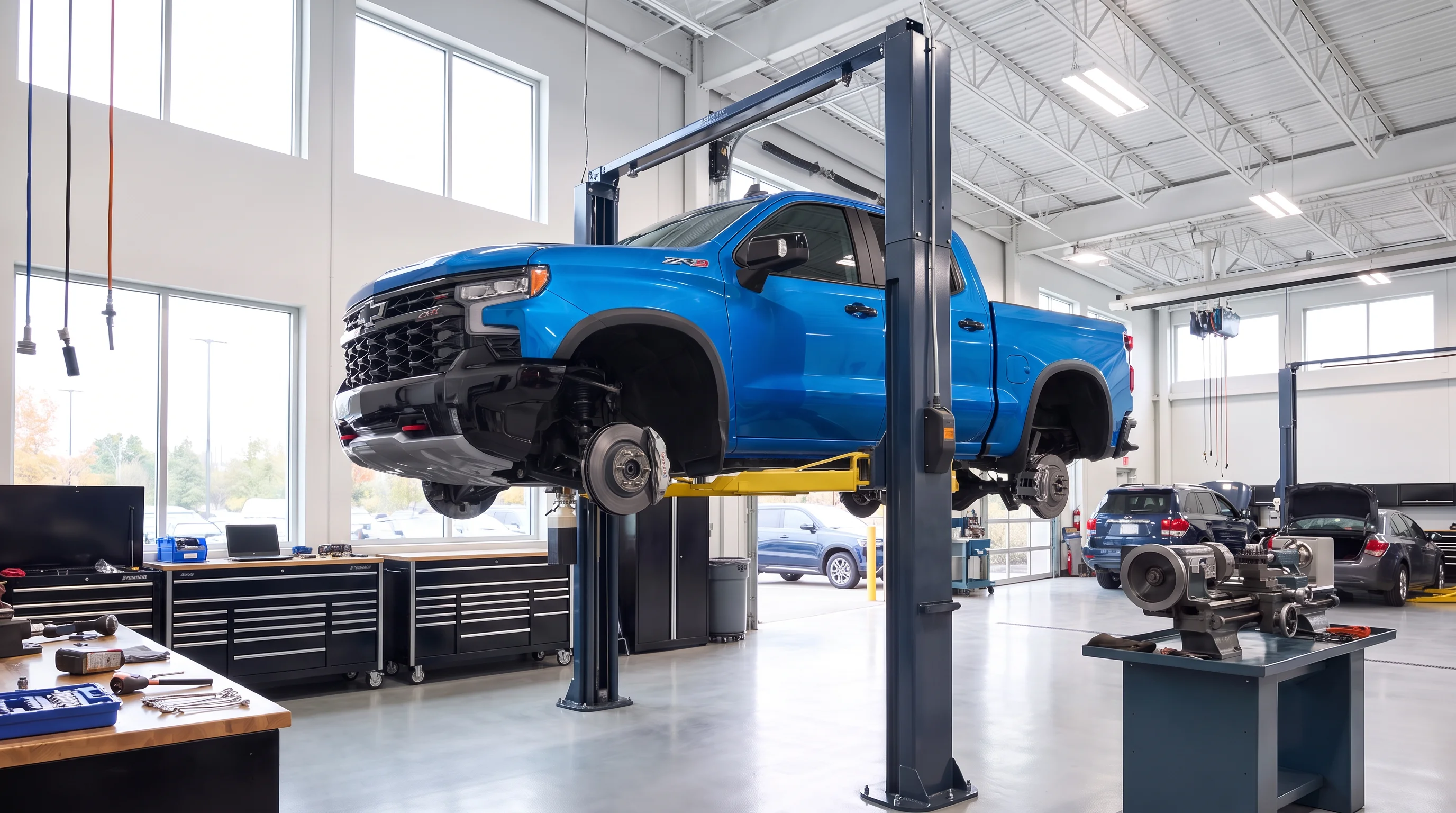
Brake pads and rotors don’t wear out on a fixed calendar. Kelley Blue Book puts the average brake pad life at around 40,000 miles, and Firestone notes that manufacturers rate pad life across a wide range, typically between 25,000 and 65,000 miles. Your driving habits, vehicle weight, pad material, and the conditions you drive in all play a part, which is why regular measurements matter more than any single mileage number. At Lynch Chevrolet GMC of Burlington, our Certified Service team recommends having your brakes serviced or inspected at least every 7,500 miles, and the Multi-Point Vehicle Inspection included with your oil change covers your brake lines, hoses, parking brake, and front and rear lining measurements.
See dealer for complete details. Multi-Point Vehicle Inspections vary by participating dealer.
How Do Brake Pads and Rotors Wear Out?
Brake pads use a composite friction material bonded to a steel backing plate. Each time you press the pedal, hydraulic pressure forces the caliper to squeeze the pads against the spinning rotor. That friction slows the wheels by turning motion into heat, and over time both the pads and the rotors wear down.
What Speeds Up Brake Wear
| Factor | How It Affects Brake Wear |
|---|---|
| Driving environment | Stop-and-go traffic and frequent stoplights wear brakes noticeably faster than steady highway driving. |
| Towing and cargo weight | Heavier loads take more energy to stop, so pads and rotors wear sooner. |
| Driving habits | Hard, sudden stops generate more heat and wear than smooth, gradual braking. |
| Pad material | Ceramic and semi-metallic pads have different wear characteristics and heat tolerances. |
Because your brakes are measured at every oil change visit, it’s worth knowing what that inspection covers. See what’s included in a Multi-Point Inspection during an oil change.
What Does a Squealing or Grinding Brake Sound Mean?
A high-pitched squeal is often your first warning. According to Kelley Blue Book, the most common cause is the brake pad wear indicator, a small metal tab designed to contact the rotor once the pad material wears down past a certain point. GM brake pads often include this indicator. A loud grinding sound is more serious: it usually means the friction material is gone and the steel backing plate is scraping against the rotor.
Brake Warning Signs at a Glance
| Symptom | What It Can Mean | What to Do |
|---|---|---|
| High-pitched squeal | The pad wear indicator is contacting the rotor as pad material wears down | Schedule brake service |
| Loud grinding | Friction material is gone and the steel backing plate is scraping the rotor | Schedule an inspection right away |
| Brief grind after sitting overnight | A thin layer of surface rust formed on the rotors | Usually fades once the brakes warm up; have it checked if it continues |
| Scraping noise | Road debris, such as small stones, trapped near the rotor | Have it inspected if the noise doesn’t clear |
| Pulsating brake pedal | Rotor thickness variation or runout | Schedule a brake inspection |
| Vehicle pulls to one side when braking | A significant difference in rotor thickness | Schedule a brake inspection |
Why You Shouldn’t Keep Driving on Grinding Brakes
- The rotor can be scored deeply enough that resurfacing is no longer possible, adding rotor replacement to the repair.
- Stopping performance drops, because worn-through pads don’t grip like they should.
Ceramic vs. Semi-Metallic Brake Pads for Wisconsin Winters
Cold temperatures change how brake pad materials behave. As Jalopnik explains, semi-metallic pads are likely to perform better in particularly cold weather and help trucks, SUVs, and other heavy vehicles maintain braking performance over time. Ceramic pads, by comparison, are quieter and produce less dust, while semi-metallic pads are known for producing more brake dust, according to AmericanTrucks.
| Attribute | Ceramic Pads | Semi-Metallic Pads |
|---|---|---|
| Cold-weather performance | Warm up more slowly; less initial bite in cold conditions | Generally better initial bite in cold weather |
| Noise and brake dust | Quieter, with less dust | Noisier, with more brake dust |
| Heavy-duty use | Not the top choice for heavy towing or hauling | Often preferred for trucks, SUVs, and heavy loads |
The best choice is usually the pad type your vehicle was designed for. Our Certified Service experts can recommend ACDelco Gold (Professional) or GM Original Equipment brakes for your Chevrolet or GMC.
Protecting Your Brakes from Road Salt
Winter brings another challenge for brakes. According to AAA, salt sticks to the underbody and accelerates corrosion on frames, brake lines, and exhaust parts. After investigating rusted brake lines on older vehicles, the National Highway Traffic Safety Administration urged drivers in cold-weather states, including Wisconsin, to wash their vehicle undercarriages several times during and after winter and to have their brake lines inspected for rust. Whether you drive in Burlington, Waterford, or East Troy, keeping salt off the underbody helps protect your brake system all season.
When Can Rotors Be Resurfaced, and When Must They Be Replaced?
Resurfacing, also called machining or turning, uses a precision lathe to remove a thin layer of metal and restore a flat, smooth braking surface. It only works if enough metal remains. As Brake & Front End notes, minimum or discard thickness specifications are usually cast or stamped on the rotor, and technicians measure the rotor with a micrometer at several points before deciding.
Resurfacing isn’t always necessary, either. According to the GM Certified Service guidance on our brake service page, if there is no pedal pulsation or steering-wheel vibration during braking, and the rotor is at least 1 mm thicker than its discard thickness, the rotor does not need to be turned or replaced when the pads are changed.
If a rotor has excessive runout, it can sometimes be corrected by reindexing the rotor on the hub or resurfacing it with an on-car lathe, according to Tire Review.
| Inspection Condition | What Technicians Look For | Typical Outcome |
|---|---|---|
| Below minimum thickness | Rotor measures at or below the stamped discard specification | Replace rotor |
| Too thin to machine | Resurfacing would take the rotor below its minimum specification | Replace rotor |
| Cracks | Visible cracks or fissures in the rotor surface | Replace rotor |
| Excessive runout | Side-to-side wobble beyond specification on a dial indicator | Resurface, reindex, or replace based on measurement |
| Deep scoring | Grooves deeper than the maximum allowable scoring | Replace if machining would take the rotor below minimum thickness |
The information on this page is provided for general informational purposes only and reflects manufacturer specifications believed accurate at the time of publication. Specifications, capacities, part numbers, and service recommendations are subject to change and may vary by model year, trim, and configuration. Always confirm the correct brake pad, rotor, and brake fluid specifications against your vehicle's owner's manual before servicing. Consult a certified technician for service specific to your vehicle.
What Affects the Cost of Brake Service?
Brake service pricing depends on what your vehicle needs once it’s inspected. These are the biggest factors:
| Cost Factor | How It Affects the Price |
|---|---|
| Front vs. rear axle | Front brakes handle the majority of a vehicle’s stopping force, so they typically wear faster and use larger components. |
| Vehicle size | Trucks and full-size SUVs use larger pads and rotors than cars and small SUVs. |
| Pads only vs. pads and rotors | If your rotors are still within specification, they may not need to be replaced. |
| Parts quality | Most GM Genuine Parts front brake pads installed at Lynch carry a 24-month/unlimited-mile warranty. |
This information is provided for general educational purposes only and does not constitute legal advice. Warranty coverage depends on the specific terms of your vehicle's warranty agreement. Consult your owner's manual or a qualified legal professional for guidance on your individual situation.
For current pricing and rebates, view our brake service offers. Wondering how parts-and-labor warranties work? Read our guide on how to choose a reliable auto repair shop in Burlington.
Brake Service FAQs
Does having brakes serviced at an independent shop void my warranty?
No. According to the Federal Trade Commission, it’s illegal for a dealer to deny your warranty coverage because you had routine maintenance or repairs done by someone else. Routine maintenance includes new brake pads. For more on keeping your records in order, see our auto repair guide.
This information is provided for general educational purposes only and does not constitute legal advice. Warranty coverage depends on the specific terms of your vehicle's warranty agreement. Consult your owner's manual or a qualified legal professional for guidance on your individual situation.
How do technicians know when rotors are worn past the safe limit?
Technicians measure rotor thickness at multiple points with a precision micrometer and compare the reading to the manufacturer’s minimum discard thickness. If the rotor is at or below that specification, or resurfacing would take it below the minimum, it must be replaced.
The information on this page is provided for general informational purposes only and reflects manufacturer specifications believed accurate at the time of publication. Specifications, capacities, part numbers, and service recommendations are subject to change and may vary by model year, trim, and configuration. Always confirm the correct brake pad, rotor, and brake fluid specifications against your vehicle's owner's manual before servicing. Consult a certified technician for service specific to your vehicle.
Does city driving wear out brakes faster than highway driving?
Yes. Frequent stop-and-go driving keeps the brakes working and generating heat, which wears pads and rotors noticeably faster than steady highway cruising. If most of your miles are in traffic, have your pad thickness checked more often.
Can worn brakes change how my vehicle stops?
Yes. Worn pads don’t grip as well, which can lengthen stopping distances. A significant difference in rotor thickness can cause the brakes to pull toward one side, and thickness variation or runout can cause a pulsating pedal.
Schedule Brake Service at Lynch Chevrolet GMC of Burlington
Regular brake inspections catch pad wear, rotor damage, and corrosion before they turn into bigger repairs. Our Certified Service experts can recommend quality ACDelco Gold (Professional) or GM Original Equipment brakes for your Chevrolet or GMC vehicle.
Visit us at 2300 Browns Lake Drive, Burlington, WI 53105, or call our service department at 262-342-2180 to book your appointment.
Service Department Hours
| Day | Hours |
|---|---|
| Monday–Thursday | 7:00 AM – 5:30 PM |
| Friday | 7:00 AM – 5:00 PM |
| Saturday | 8:00 AM – 1:00 PM |
| Sunday | Closed |
Keep the rest of your vehicle on schedule, too: see what’s included with an oil change in Burlington.
Disclaimers
This information is provided for general educational purposes only and does not constitute legal advice. Warranty coverage depends on the specific terms of your vehicle's warranty agreement. Consult your owner's manual or a qualified legal professional for guidance on your individual situation.
The information on this page is provided for general informational purposes only and reflects manufacturer specifications believed accurate at the time of publication. Specifications, capacities, part numbers, and service recommendations are subject to change and may vary by model year, trim, and configuration. Always confirm the correct brake pad, rotor, and brake fluid specifications against your vehicle's owner's manual before servicing. Consult a certified technician for service specific to your vehicle.
See dealer for complete details. Multi-Point Vehicle Inspections vary by participating dealer.